


Shopping Cart
Your cart is empty
Add some products to start your order. We ship all over Europe.
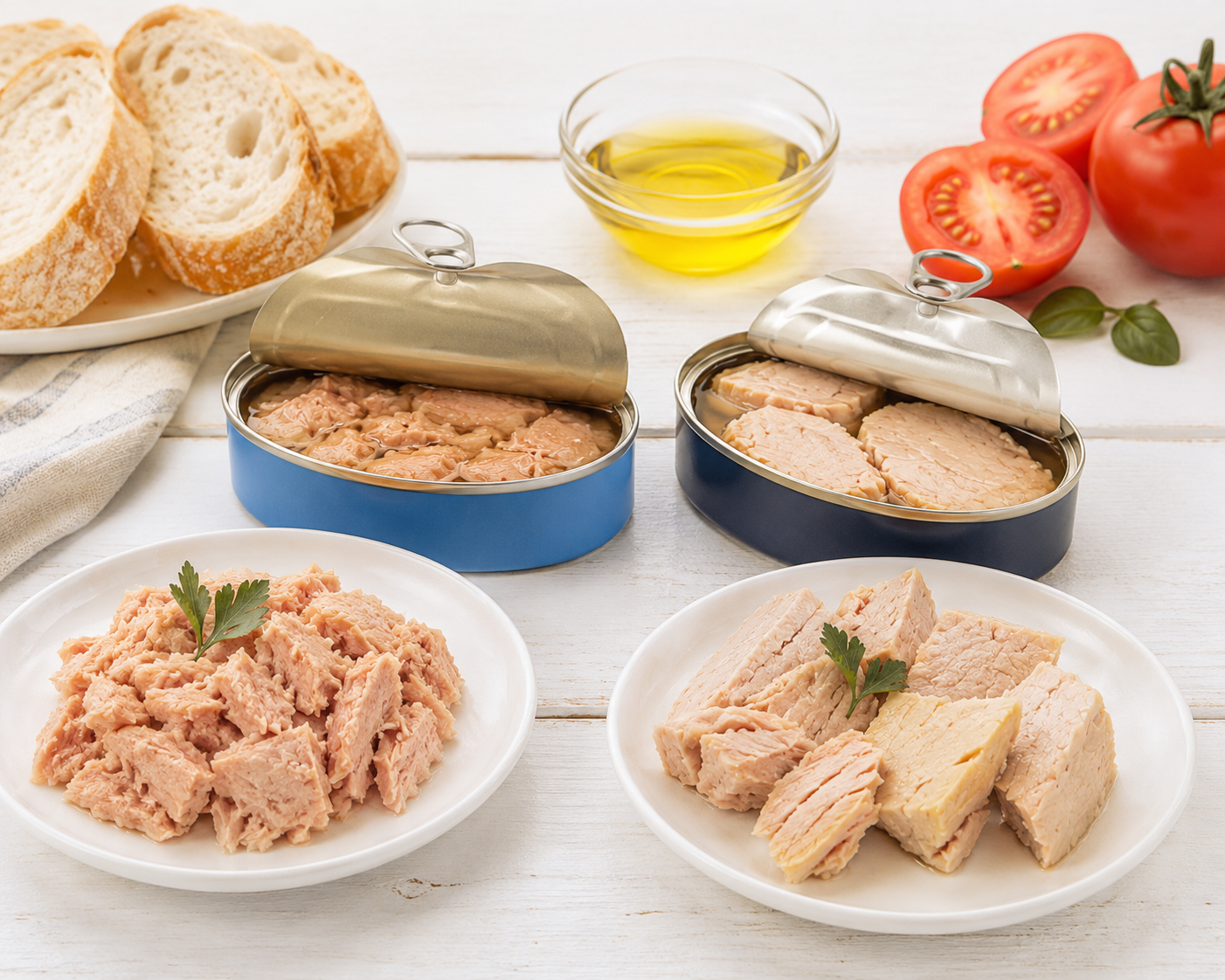
Bonito del norte and light tuna are two of the most popular canned fish products in Spain. Both are regularly used in salads, sandwiches and empanadas, although their characteristics are not exactly the same. Understanding their particularities helps you make the most of their qualities and choose the right product for each dish.
The main difference between bonito del norte and light tuna lies in the species of fish used, but there are also differences in colour, texture and flavour.
Bonito del norte belongs to the species Thunnus alalunga, also known as albacore or white tuna. It is characterised by its long pectoral fins and its pale flesh, which is highly prized in Spanish cuisine. Fishing for it has a long tradition in the Cantabrian Sea, especially during the summer coastal season.
One of its most valued features is the texture of its flesh, which is soft and delicate when properly preserved. Its flavour is also relatively intense, so it can be enjoyed with simple accompaniments such as olive oil, tomato or fresh vegetables.
It is available in different presentations, from whole loins to flakes. The best-quality preserves pay particular attention to the selection of the pieces and how they are presented, aspects that make a real difference to the eating experience.
Light tuna (atún claro) is a commercial name used for canned tuna that usually corresponds to species such as yellowfin tuna (Thunnus albacares). It is one of the most common products in Spanish pantries thanks to its versatility and the wide range of formats available.
Its flesh is generally darker than that of bonito del norte, with a pinkish or slightly brownish tone after processing. It also has a firm texture and a more pronounced flavour, although these characteristics can vary depending on the species, the cut and the preserving process.
Light tuna can be bought in olive oil, sunflower oil or in brine. This variety makes it easy to add to very different recipes, from cold dishes to oven-baked meals.
These differences are only a guide, as the oil used, the selection of the pieces and the production method also have a considerable influence on the final result. A good tin of light tuna can offer excellent quality, just as bonito del norte requires careful preparation to retain its best qualities.
The choice mainly depends on the recipe and how prominent the fish will be. When you want to appreciate its texture and flavour without too many extra ingredients, bonito del norte is a particularly good option.
For example, good bonito del norte loins go perfectly with roasted peppers, seasonal tomatoes or a warm vegetable salad. They can also be served on their own as an appetiser with a drizzle of good olive oil.
Light tuna, on the other hand, works very well in recipes where it is mixed with other ingredients. It is a practical option for empanadillas, Russian salad, savoury pies, sandwiches or stuffed vegetables. Its texture makes it easy to use in dishes that require the fish to be flaked.
In any case, both can be used interchangeably in many recipes. The decision will depend on the result you are looking for, your personal preferences and your budget.
The covering liquid also deserves attention when choosing a preserve. Olive oil adds flavour and helps maintain a pleasant texture, especially when the fish is eaten straight from the tin or jar.
With bonito del norte, this presentation lets you enjoy the loins with minimal preparation. Light tuna in olive oil also gives excellent results in salads, on toast and as an appetiser.
If the fish is going to be mixed with mayonnaise, tomato sauce or other sauces, preserves in brine or other oils work just as well. It is always a good idea to check the label to find out the ingredients, the species used, the drained weight and the characteristics of the product.
At Your Spanish Shop we want you to keep enjoying the flavours of Spanish cuisine wherever you are. That is why our online shop offers a selection of canned seafood, including bonito del norte and light tuna from well-known brands such as Consorcio.
Comments (0)