


Shopping Cart
Your cart is empty
Add some products to start your order. We ship all over Europe.
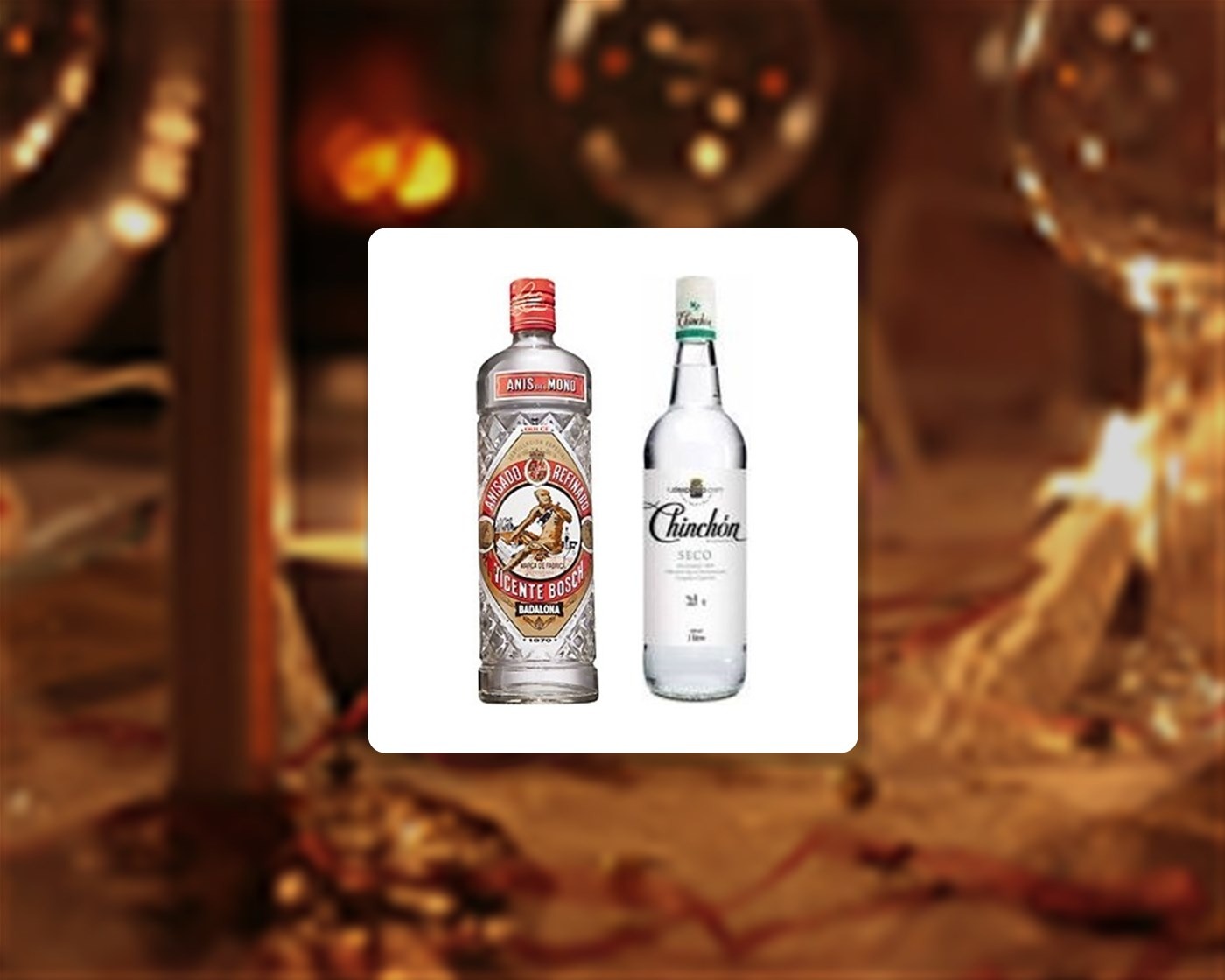
Dessert is over, someone brings out the polvorones and, almost without anyone asking, a bottle of anise appears on the table. In Spain, the Christmas sobremesa – that long, relaxed chat at the table after a meal – has its own rituals, and one of them is the small glass that accompanies the sweets while the conversation goes on and on. Anís del Mono is probably the most recognisable liqueur of the season, but it is not alone: Chinchón, pacharán, crema de orujo and Licor 43 all have their place reserved at these gatherings. We look at how they differ and how to enjoy each one.
All Spanish anise liqueurs start from the same base: a spirit in which seeds of matalahúga, the popular name for green aniseed, are macerated and distilled. The big difference lies in the sugar.
Sweet anise has added sugar, a more moderate strength of around 35% ABV and a smooth, honeyed mouthfeel. It is the one most often drunk with the family, the one offered to guests and the one many grandmothers use in their baking, for example in roscos (ring doughnuts), pestiños (honey-glazed fritters) or torrijas (Spanish-style French toast).
Dry anise, on the other hand, contains no sugar and is considerably stronger, as it can reach or exceed 45% ABV. Its flavour is clean and very aromatic, with a warming finish. It is usually drunk cold or on the rocks, and it is the favourite of those looking for a digestif after a hearty meal.
Anís del Mono was born in Badalona in the 19th century and quickly became famous for two details that remain unchanged today. The first is its label, featuring a monkey with a human face holding a scroll, an illustration that has become an icon of Spanish advertising design.
The second is the bottle itself, carved in relief with a diamond-point pattern. That rough surface is what has earned it a place in folk music: in many homes it is scraped with a spoon or the handle of a knife to accompany Christmas carols, alongside the tambourine and the zambomba (a traditional friction drum). Few drinks can boast such a specific role on Christmas Eve.
It is made in both sweet and dry versions. Sweet Anís del Mono, at 35% ABV, is the most popular and the one that pairs best with mantecados, marzipan and almond turrón.
About 50 kilometres from Madrid, the town of Chinchón has been linked to anise production for centuries. Its spirit has a well-deserved reputation for its intensity and for the quality of the matalahúga it uses, and the town's name has become almost synonymous with dry anise.
Dry Chinchón anise reaches 45% ABV and is especially enjoyable very cold or with a couple of ice cubes, which turn it slightly cloudy as the temperature drops. There is also a sweet version for those who prefer something gentler.
If your guests have varied tastes, it is worth having an alternative to anise to hand. These are five of the most traditional:
And for the traditionalists, a glass of brandy, such as Carlos III or Osborne's 103, is still the go-to choice to accompany a cigar or a long conversation by the fireside.
Temperature makes a big difference to the experience. Dry anise, pacharán and crema de orujo are better if they spend a while in the freezer before serving or if you add a couple of ice cubes. Sweet anise and ponche, by contrast, are best appreciated at room temperature or only slightly chilled.
As for glasses, small liqueur glasses are traditional, because the idea is to take a few sips rather than fill up. There are also deep-rooted customs involving coffee: in Cartagena people drink the asiático, which mixes coffee, condensed milk, brandy and Licor 43, and in many parts of Spain the carajillo de anís (coffee with a dash of anise) is a classic on winter mornings. Of course, the best after-dinner gathering is one enjoyed in moderation, so always serve sensibly and offer non-alcoholic alternatives too.
Being far from Spain does not mean your Christmas sobremesa has to be any different. In our Spanish liqueurs section you will find Anís del Mono, Chinchón, pacharán, orujos, brandies and much more, ready to be delivered to your home so that the anise bottle can ring out again during your carols.
Comments (0)