


Shopping Cart
Your cart is empty
Add some products to start your order. We ship all over Europe.
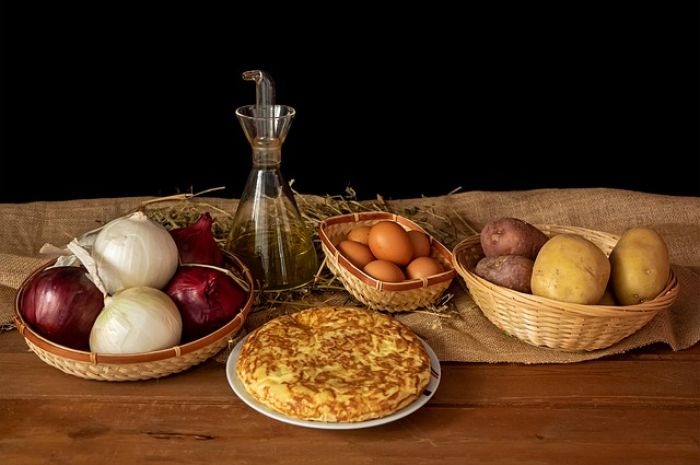
To speak of Spanish cuisine is inevitably to speak of the potato omelet. Simple in ingredients, yet complex in nuances, this recipe is part of Spain´s gastronomic DNA. Present in bars, family homes, celebrations, and impromptu picnics, the Spanish omelet is one of those dishes that sparks passionate debates, childhood memories, and culinary pride.
To prepare a classic omelet for four people, you´ll need good quality potatoes, preferably firm but soft enough to cook through. The eggs must be fresh, as they are the structural foundation of the dish. Olive oil is essential, not only for frying the potatoes but also for adding flavor. And of course, a pinch of salt to enhance the overall taste.
The ratio is key. Approximately half a kilo of potatoes and five or six eggs offer an ideal balance between creaminess and consistency.
The first step is to peel and slice the potatoes. The traditional cut is into thin slices or small, irregular pieces that allow for even cooking. They shouldn´t be too thick or too thin, as we want them to soften without falling apart completely.
In a large frying pan, add plenty of olive oil and heat over medium heat. Add the potatoes when the oil is hot, but not smoking. The goal is not to fry them until crispy, but to confit them slowly. For about twenty minutes, the potatoes should cook slowly, stirring occasionally so they don´t stick and cook evenly.
While the potatoes are cooking, beat the eggs in a large bowl with a pinch of salt. Don´t overbeat them; simply mix the whites and yolks until you have a smooth consistency. When the potatoes are ready, drain them well to remove excess oil and add them to the bowl with the beaten eggs. This mixture should rest for a few minutes so the egg soaks into the potato and the flavors meld.
The pan is cleaned, leaving just a thin layer of oil, and reheated over medium heat. The mixture is poured in and spread evenly. Here begins one of the most delicate moments: the setting. The tortilla should cook slowly, gently moving the pan to prevent sticking, but without stirring the mixture.
When the edges are firm and the center is still slightly moist, it´s time to flip it. Using a flat plate, cover the pan and, with a firm but careful touch, turn the tortilla so the uncooked side is facing down. Return it to the pan to finish cooking on the other side. The cooking time will depend on your preference. Some like a well-done tortilla; others, a juicier one in the center.
Once ready, let it rest for a few minutes before serving. This short rest allows the juices to settle and makes for a cleaner cut.
 Extra Virgin Olive Oil Abril 1 L.€9.94Buy
Few recipes generate as much debate as the potato omelet with onion versus the version without. Onion adds sweetness, juiciness, and an aromatic nuance that many consider essential. To incorporate it, simply slice it thinly and cook it along with the potatoes, allowing it to caramelize slightly during slow cooking.
The version without onion, on the other hand, opts for a more direct flavor and the pure texture of the potato and egg. It´s more neutral and allows you to appreciate the quality of the main ingredients more clearly. In both cases, the key is to maintain balance and not overwhelm the dish.
Beyond the controversy, the truth is that both options are part of Spanish tradition, and every household has its own preference.
Starting with the basic recipe, the potato omelet allows for numerous variations that enrich the dish without losing its essence. One of the most popular incorporates bell peppers, which add a slightly sweet and colorful touch. It´s also common to add diced chorizo, which infuses the mixture with its spiced flavor and transforms the tortilla into a more substantial option.
Another popular variation is the stuffed tortilla. Once the classic base is cooked, it can be carefully opened and filled with ingredients such as Serrano ham, cheese, or sautéed spinach. These versions are frequent at celebrations and family gatherings, where the tortilla becomes the centerpiece of the table.
In recent years, more contemporary reinterpretations have emerged that include ingredients such as zucchini, cod, or even truffles, demonstrating that the potato tortilla is a culinary canvas adaptable to different gastronomic sensibilities.
At Your Spanish Shop, we believe that an exceptional Spanish tortilla starts with quality ingredients and authentic Spanish flavor. That´s why we carefully select extra virgin olive oils, free-range eggs in shipping-friendly sizes, and ready-made tortillas that allow you to recreate the gastronomic experience of Spain anywhere in Europe. Our online store is designed for those who live abroad and want to keep culinary traditions alive, as well as for lovers of Spanish cuisine who seek genuine and reliable products.

Comments (0)